
Texas Yule Plants: Rooted in Resilience and Renewal
The holiday season in Texas carries its own rhythm. While northern landscapes lean into snow and frozen stillness, our gardens here often remain restless—cedar pollen fills the air, rosemary still pushes out fragrant shoots, and yaupon holly berries glow red against evergreen leaves. The warmth unsettles bees and gardeners alike, yet the turning of the year still brings its invitation: to pause, to honor the Longest Night, and to plant seeds of renewal. Yule, the ancient festival of light returning, finds new expression in Texas soil.
🌲 Evergreens as Symbols of Endurance
Evergreens have long been central to Yule celebrations, representing life that endures through the darkest season. In Texas, we find our own native evergreens carrying this symbolism:
Ashe Juniper (Juniperus ashei): Known for its strong scent and infamous pollen, this “cedar” is also a tree of cleansing. Its branches can be woven into wreaths or used in seasonal decorations, reminding us that endurance sometimes comes with challenge.
Live Oak (Quercus virginiana): Unlike northern oaks, our live oaks hold their leaves year‑round. They embody strength and continuity, grounding the season in resilience.
Yaupon Holly (Ilex vomitoria): With its bright red berries, yaupon echoes traditional holly symbolism of vitality and protection. Indigenous peoples brewed its leaves into a caffeinated tea, making it both a festive and practical plant. (Photo below is courtesy of the Native Plant Society of Texas)
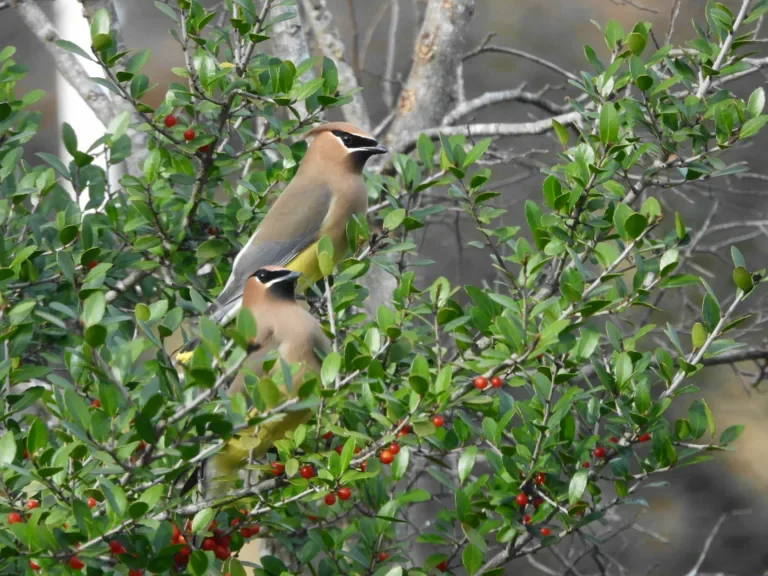
These evergreens remind us that even in a season of rest, life persists. Their presence in wreaths, garlands, and holiday displays ties Texas landscapes to ancient Yule traditions.
🌿 Aromatic Herbs for Holiday Fragrance and Feast
Holiday celebrations are sensory, and herbs bring fragrance, flavor, and meaning to the season. Texas gardens offer hardy herbs that thrive even in December:
Rosemary: Associated with remembrance, rosemary is a staple in both cooking and seasonal bundles. A sprig tucked into a wreath or simmered in holiday stew ties nourishment to memory. For a festive feeling, try simmering rosemary, orange peel and cinnamon sticks in water. Keep an eye on it so the water doesn’t run out but makes the house smell divine!
Bay Laurel: Symbolizing victory and renewal, bay leaves can be woven into garlands or added to soups and roasts. In Texas, bay thrives in sheltered gardens, offering evergreen leaves for holiday use. Most of us in Central Texas keep our bay laurels in pots and bring them into the house or greenhouse when cold weather approaches.
Juniper Berries: Used in seasonal blends, juniper carries a resinous scent that evokes cleansing fires and festive gatherings. If you don’t care for the smell of gin, pass on this herb.
These herbs connect the feast table to the season’s atmosphere, reminding us that nourishment itself is part of celebration.
🌼 Seasonal Blooms and Symbolic Plants
While many plants rest in winter, Texas offers surprising bursts of color and symbolism:
Agarita (Mahonia trifoliolata): An evergreen shrub with spiny leaves and bright berries, agarita offers both protection and festivity. Its berries can be gathered for jams or placed in holiday displays as symbols of abundance.
Texas Redbud (Cercis canadensis var. texensis): Though dormant in winter, its seedpods can be collected as tokens of promise. Redbud reminds us that renewal waits quietly for spring.
Native Mistletoe (Phoradendron species): Found in oak, hackberry, cedar elm, and mesquite trees, mistletoe carries ancient associations of blessing. In Texas, it becomes a reminder that even parasitic plants hold seasonal meaning. Interestingly enough, the Christmas Mistletoe (Phoradendron tormentosom) is only native to Texas, Oklahoma, and Louisiana
These plants expand the palette of Yule beyond evergreens, grounding the holiday in Texas ecology.
🎄 Holiday Uses and Practices
Bringing Texas plants into holiday traditions creates celebrations that are both familiar and local:
Wreaths and Garlands: Weave cedar, yaupon holly, and rosemary into door wreaths for seasonal welcome.
Fragrance and Atmosphere: Burn juniper or cedar sprigs in fireplaces or simmer rosemary on the stove to fill the home with warmth.
Seed and Berry Displays: Place agarita berries, redbud pods, or mistletoe on tables as symbols of continuity and cheer.
Cooking and Feasting: Use rosemary and bay in holiday meals, tying nourishment to memory and festivity.
Each act becomes a way of celebrating the season through plants that thrive in our own soil.
✨ Closing Reflection
As the Longest Night approaches, I find myself grateful for the resilience of Texas plants. Ashe Juniper, holly, rosemary, and agarita remind me that endurance takes many forms—sometimes fragrant, sometimes thorny, sometimes quietly waiting in seedpods. Yule is the turning of the sun, the promise that light will return, and with it the chance to begin again.
In this season, I honor both the darkness that shaped me and the light that is already on its way. Each plant I gather, each wreath I weave, each seed I hold becomes a prayer for the days ahead: for growth, for health, for clarity, and for joy.
